
Society for the confluence of festival of India

Friday, 01 NOV 2024

Diwali Rangoli Patterns
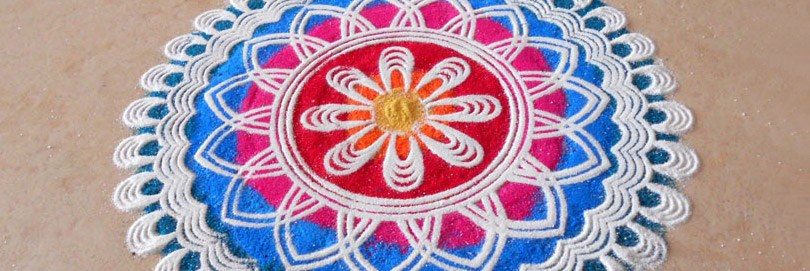


| Click here For Rangoli Patterns Design | Click here For Diwali Rangoli Design |
Rangoli, also known as Alpana, Kolam and by other names is a traditional art of decorating courtyards and walls of Indian houses, places of worship and sometimes eating places as well. The powder of white stone, lime, rice flour and other paste is used to draw intricate and ritual designs.
Although Rangoli art is Maharashtrian in origin, it has become quite popular all over the country. Each state of India has its own way of painting Rangoli. One characteristic of Rangolis is that it is painted by commoners. On some special occasions like Dipavali it is painted in every home, with or without formal training in Rangoli art. The art is typically transferred from generation to generation and from friend to friend.
Traditionally Rangolis are painted or created out of colored sand/rice powder. A symmetrical pattern or picture of Gods, Goddess, Dancers, Diyas etc. is drawn and colored rice powder/sand is then layered on top to form a picture. A symmetrical rangoli pattern can be drawn on paper or card and then decorated by children with crumpled tissue paper.
Spaces can be created within the rangoli design to place diyas. One can also use flower petals of different colors such as golden marigolds, bright red roses to add that extra dimension to the pattern. With a little bit of imagination, a dash of aesthetic sense and dollops of patience, one can create a piece of art with colors.
Most of the patterns are circular indicative of the endlessness of time. The day-to-day Rangoli patterns are simple or intricate. The most common rangoli designs start with dots which are connected to form lines and other geometrical shapes such as swastika, aum, stars, squares, circles, triangles etc. These geometrical patterns must be formed in a continuous, unbroken lines.
| Click here For Rangoli Patterns Design | Click here For Diwali Rangoli Design |
- - Diwali Cards
- - Crackers
- - Dry Fruits


Festival Fun
- Diwali Rangoli
- Diwali Whatsapp Messages/Status
- Diwali Recipes
- Deep in Diwali
- Tradition of Playing Cards
- Pooja Thali Decorations
- Making Diwali Cards
- Diwali Essay
- Diwali Poems
- Diwali Songs
- Diwali Mela
- Diwali Wallpapers
- Diwali Decorative Items
- Diwali 2024
- Diwali Messages
- Diwali Quotes
- Lakshmi Pooja
- Articles
- Lakshmi Ganesha Mantras
- Lakshmi Chalisa
- Diwali SMS
- Diwali Solar Eclipse
- Diwali Remedies
- 108 Lakshmi Names
Diwali Rangoli
Indians love colors and its perfectly reflected in various ways. Rangoli is one such example that is a unique art work that is...Know More
Diwali in History
The history of Diwali is replete with legends and these legends are moored to the stories of Hindu religious scriptures...Know More
Diwali Messages
Enjoy the Best and the Most Heartfelt Diwali Messages from all entries received by us!!...Know More
Diwali Gift Ideas
Diwali is the epiphany of showing gratefulness to the almighty for blessing with wealth and wisdom. It is the time of illuminating...Know More