
Society for the confluence of festival of India

Friday, 01 NOV 2024

Diwali in Tamil Nadu
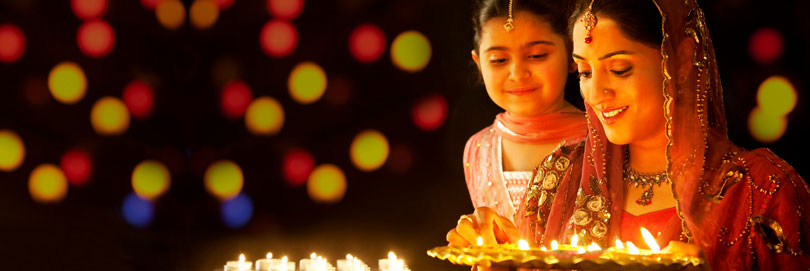


| Diwali Celebration in Tamil Nadu | ||||||||||
|
Diwali in the Tamil Nadu is celebrated in the month of aipasi (thula month) 'naraka chaturdasi' thithi, preceding amavasai. The preparations for the Diwali Festival begin the day before, when the oven is cleaned, smeared with lime, four or five kumkum dots are applied, and then it is filled with water for the next day's oil bath. The house is washed and decorated with kolam (rangoli) patterns with kavi (red oxide). For Diwali Festival, in the traditional pooja room, betel leaves, betel nuts, plaintain fruits, flowers, sandal paste, kumkum, gingelly oil, turmeric powder, scented powder is kept. Crackers and new dresses are placed in a plate after smearing a little kumkum or sandal paste.
The Diwali day begins with everyone in the family taking an oil bath before sunrise, a custom arising from a belief that having an oil bath in the morning on the day of diwali is equivalent to taking bath in the Ganges. Before the bath, elders in the house apply gingelly oil on the heads of the younger members. For those hailing from Tanjore, the custom is to first take a small quantity of deepavali lehiyam (medicinal, ayurvedic paste) after the oil bath and then have breakfast. Often sweets are eaten after wearing new clothes. In almost all houses, items like ukkarai, velli appam, idly, chutney, sambhar, omapudi, boondhi are prepared. For lunch, jangri, pathir peni, or one variety of the poli are made.
Crackers are usually burst only after the bath. Meanwhile, kuthu vilaku (oil lamp) is lit in the pooja room. Mats or wooden planks are placed facing east. After naivedhya (offering to the Gods) of the items, a plaintain fruit is given to each member of the family followed by betel leaves and betel nuts. Those who have to perform 'pithru tharpanam' will have a second bath perform the tharpanam and don't eat rice at night.
- - Diwali Cards
- - Crackers
- - Dry Fruits


Festival Fun
- Diwali Rangoli
- Diwali Whatsapp Messages/Status
- Diwali Recipes
- Deep in Diwali
- Tradition of Playing Cards
- Pooja Thali Decorations
- Making Diwali Cards
- Diwali Essay
- Diwali Poems
- Diwali Songs
- Diwali Mela
- Diwali Wallpapers
- Diwali Decorative Items
- Diwali 2024
- Diwali Messages
- Diwali Quotes
- Lakshmi Pooja
- Articles
- Lakshmi Ganesha Mantras
- Lakshmi Chalisa
- Diwali SMS
- Diwali Solar Eclipse
- Diwali Remedies
- 108 Lakshmi Names
Diwali Rangoli
Indians love colors and its perfectly reflected in various ways. Rangoli is one such example that is a unique art work that is...Know More
Diwali in History
The history of Diwali is replete with legends and these legends are moored to the stories of Hindu religious scriptures...Know More
Diwali Messages
Enjoy the Best and the Most Heartfelt Diwali Messages from all entries received by us!!...Know More
Diwali Gift Ideas
Diwali is the epiphany of showing gratefulness to the almighty for blessing with wealth and wisdom. It is the time of illuminating...Know More