
Society for the confluence of festival of India

Friday, 01 NOV 2024

Diwali in Maharashtra
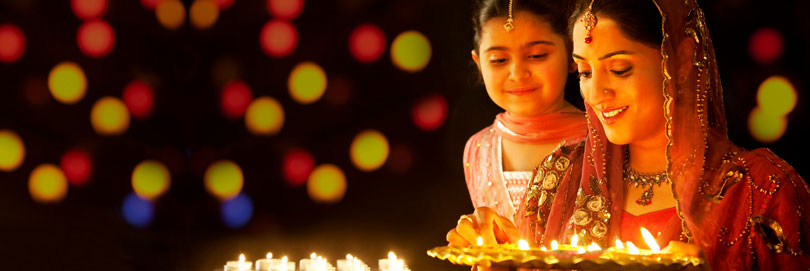


| Diwali Celebration in Maharashtra | ||||||||||
|
Diwali celebration in Maharashtra is interestingly different from what is seen in other parts of the country. In a typical Marathi family Diwali celebrations starts with 'Vasu-baras' that comes on tithi 'Ashwin krushna dwadashi' as per Marathi calendar. Vasu-baras is a celebration held in honor of cows - regarded as mother by Hindus. Following the rituals of the day married women perform 'puja' of cows having calf. The tradition symbolizes a woman's gratitude towards cow for serving them and their children.
DhanatrayodashiDhanatrayodashi is a popular name for Dhanteras in Maharashta. Some also celebrate Dhanvantari Jayanti on this day to honor the great ancient doctor Dhanvantari. On the day of Dhanatrayodashi “Yama-Deep-Dan” is held wherein mothers and wives make one ‘divas’ each for all living male in the family. The diva, made from the kneaded flour is lit and offered to Lord Yama in the evening. As they perform the ritual womenfolk pray to Lord Yama - the Hindu mythological God of Death that their husbands and sons be blessed with a long life.
Narak ChatudarshiChhoti Diwali is popularly known as Narak-Chaturdashi in Maharashtra. On this day people celebrate Narakasur's death by Lord Krishna. They get up early in the morning and massage their bodies with scented oil. And as a custom they use 'utane' or 'utanah' for bath instead of soap. This special bath is referred to as 'abhyang-snan'. It may be noted that 'Utane' is not the same as uptan. Utane is made of several things having ayurvedic properties like 'chandan' (sandalwood), 'kapoor' (camphor), manjistha, rose, orange skin and haldi (turmeric).
Diwali Celebrations - Lakshmi-PujanLakshmi-pujan is celebrated on the Diwali evening. Believing that Goddess Lakshmi visits every house in the evening, people perform ‘Lakshmi Puja’. This is essentially a worship of Goddess Lakshmi, Lord Ganesh, money, jewelleries and the broom.
A variety of mouth-watering delicacies including chivda, chakali, shankar-pale, anarse, kadaboli, karanji, shev, chirote etc are prepared to mark the festival. Throughout Diwali, Marathi people hang 'Akash-kandil' / 'Akash-dive' and light up 'panti's outside their houses. Tradition of drawing colourful 'Rangoli's is also followed in Maharashtra as in rest or India.
Diwali Cha PadvaThe third day of Diwali is also celebrated as 'Diwalicha Padva' by many. This is a celebration of togetherness of husband and wife and love shared by them. To mark the occasion wife does 'aukshan' of her husband and husbands present a special gift to their wife.
Bhav-BijThe last day of Diwali festival is called Bhau Bij. In this sisters do 'aukshan' of their brothers and pray for their long life. Brothers, in their turn bless their sister and pamper them with loads of Bhau-Bij gifts.
Tulsi-VivahIn Maharashtra, end of Diwali celebrations marks the beginning of Tulsi-Vivah. Under this people organize marriage of sacred tulsi (a basil plant) in their house. In Maharashtra the tradition is that people start organizing marriage ceremonies of their sons/daughters only once Tulsi-vivah starts. Celebration of Diwali ends with Dev-Diwali.
With Inputs from Mr S. V. Limaye- - Diwali Cards
- - Crackers
- - Dry Fruits


Festival Fun
- Diwali Rangoli
- Diwali Whatsapp Messages/Status
- Diwali Recipes
- Deep in Diwali
- Tradition of Playing Cards
- Pooja Thali Decorations
- Making Diwali Cards
- Diwali Essay
- Diwali Poems
- Diwali Songs
- Diwali Mela
- Diwali Wallpapers
- Diwali Decorative Items
- Diwali 2024
- Diwali Messages
- Diwali Quotes
- Lakshmi Pooja
- Articles
- Lakshmi Ganesha Mantras
- Lakshmi Chalisa
- Diwali SMS
- Diwali Solar Eclipse
- Diwali Remedies
- 108 Lakshmi Names
Diwali Rangoli
Indians love colors and its perfectly reflected in various ways. Rangoli is one such example that is a unique art work that is...Know More
Diwali in History
The history of Diwali is replete with legends and these legends are moored to the stories of Hindu religious scriptures...Know More
Diwali Messages
Enjoy the Best and the Most Heartfelt Diwali Messages from all entries received by us!!...Know More
Diwali Gift Ideas
Diwali is the epiphany of showing gratefulness to the almighty for blessing with wealth and wisdom. It is the time of illuminating...Know More